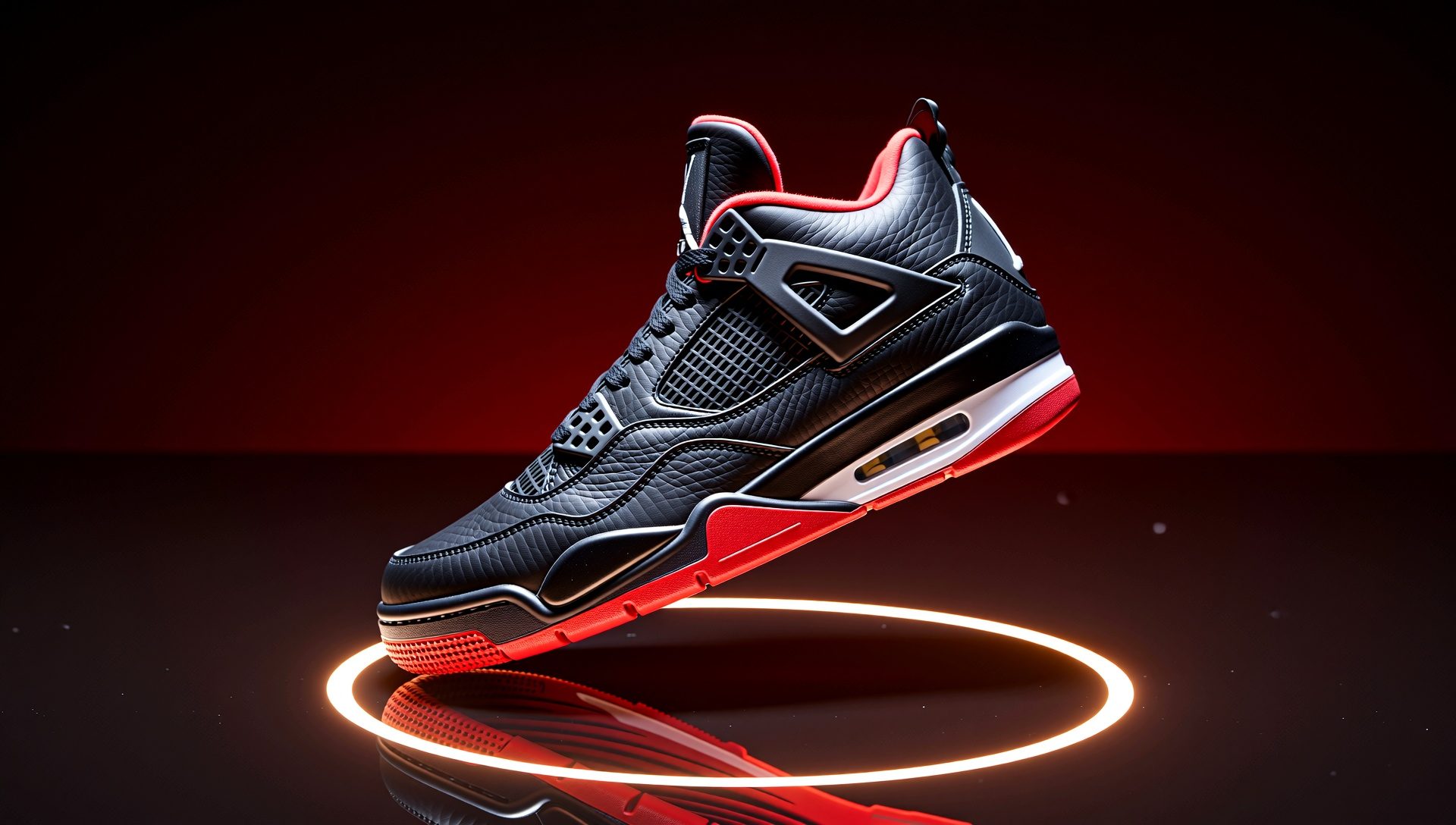
Jordan Brand Sneakers
It started with a basketball shoe. The Air Jordan 1 was designed in 1985 for a 21-year-old rookie who the NBA fined $5,000 per game for wearing it. Today, that same shoe is one of the most collected lifestyle objects on the planet — worn by millions of people who have never watched a basketball game and who couldn't name a single Michael Jordan stat. Jordan Brand has pulled off something rare: it transcended the story that created it. The Jumpman logo means something to a 19-year-old in Paris or Seoul that has nothing to do with the 1996 Chicago Bulls. For a brand built on one athlete's career, that disconnect is the most powerful thing it has going for it.
From the hardwood to the street: how the Air Jordan 1 became the most influential lifestyle sneaker ever made
Nike expected $3 million in first-year sales from the Air Jordan line. The full numbers — and the story behind them — are on the Jordan Brand basketball page. What matters here is what came after: the cultural machine that turned a basketball shoe into a lifestyle institution.
From 2014 to 2024, Jordan Brand revenue grew 268%, doubling between 2020 and 2024 alone. In fiscal 2024, the brand generated $7 billion in revenue — Nike's strongest performing division. The "performance" basketball sneaker market has declined over the past decade as casual footwear dominates, but Jordan Brand made the perfect pivot from court shoes to lifestyle staples — worn by NBA players during games, fashion influencers in Instagram posts, rappers in music videos, everyday consumers as streetwear, and collectors as investment pieces.
Michael Jordan built the brand — but today's Jordan consumer doesn't need to know who he is
Here is the paradox at the center of Jordan Brand's lifestyle success: the brand has become more powerful than the story that created it.
Michael Jordan retired for the final time in 2003. The consumer who was 15 years old in 2003 is 37 today. The 19-year-old buying Air Jordan 1s in 2026 was born three years after Jordan's last game. For this buyer, the Jumpman isn't a reference to a basketball player — it's a cultural marker, a signal of taste, an object with a certain weight in sneaker culture that operates entirely independently of its origin story.
In the United States, 89% of sneaker consumers recognize Jordan Brand, with 25% actively purchasing its products. That recognition doesn't require basketball literacy. The Air Jordan 13 "The Last Dance" was auctioned for $2.2 million — a data point that matters less for what it says about collectibility and more for what it says about cultural permanence. Jordan Brand is now a self-sustaining cultural institution. The founder is still alive and still earning approximately $300 million annually from Nike royalties, but the brand no longer needs him to explain itself.
Retro culture and the Jordan machine: why the re-release model still works decades later
Jordan Brand's business model is built on something no other brand can replicate: a 40-year archive of culturally loaded colorways, each tied to a specific moment in basketball and cultural history, each capable of generating demand when reissued with the right timing and the right scarcity.
Nike and Jordan Brand combined held over 70% of the sneaker resale market value in recent years, a dominance built almost entirely on the retro machine's ability to manufacture desire for shoes that have already existed for decades.
The risk, as with Nike's Dunk and Air Force 1, is oversaturation. The peak era of Air Jordan collabs and retros dominating resale platforms with astronomical markups has come to a close. But the top tier — Travis Scott, Fragment, Union — still generates genuine scarcity and genuine demand. The gap between the best collabs and the average ones is widening, which is actually healthy: it forces Jordan Brand to be more selective about who gets access to the archive.
Travis Scott, Off-White, Union: the collab ecosystem that turned Jordan Brand into contemporary art
Jordan Brand's collab history is the deepest and most culturally loaded of any sneaker brand in the market. Virgil Abloh's Off-White Air Jordan 1 "Chicago" is the benchmark — part of "The Ten" collection released in 2017, it turned design into storytelling and pushed sneaker collabs into the world of contemporary art.
Travis Scott built on that foundation with a different approach: narrative over deconstruction. The reversed Swoosh became his signature detail. Travis Scott x Jordan collabs averaged $451 resale in 2024 — a 197% markup over retail. His Air Jordan 1 Retro High OG commands resale prices ranging from $1,800 to $5,500. The Travis Scott x Fragment x Air Jordan 1 Low, released at $155 retail in November 2025, averaged $1,700 on StockX at launch.
Union Los Angeles brought a streetwear sensibility. Fragment Design, through Hiroshi Fujiwara, brought Japanese minimalism and a connection to 30 years of streetwear heritage. Each collaborator accesses Jordan Brand from a different cultural entry point — which is exactly what makes the ecosystem durable.
Tatum, Dončić, Zion: the current athletes keeping Jordan Brand credible on the court while the lifestyle side runs itself
Jordan Brand's lifestyle business runs largely on its own momentum. The performance side still requires active investment — and the current athlete roster provides exactly the right level of basketball credibility.
Jayson Tatum's Jordan Tatum line gives the brand a Boston Celtics star at his peak years. Luka Dončić's signature line, launched in 2022, gives it the most exciting European player of his generation. Jordan Brand has no plans to release another Jordan Zion model after the Zion 4, with Williamson's signature line sunsetting as his contract expires in 2026 — since entering the league in 2019, he has missed 211 games out of 456 played.
Jordan Brand moves forward with Tatum and Dončić as its primary performance anchors, and Paolo Banchero as a player-exclusive athlete receiving Jordan sneakers without a signature line — for now.
Don't miss these upcoming Jordan Brand releases
Jordan Brand's release calendar is one of the most anticipated in the market — retro colorways, signature athlete updates, and the occasional collab that generates its own cultural moment. The Travis Scott pipeline remains active. The Luka and Tatum signature lines continue to evolve.
We track every confirmed Jordan Brand lifestyle release on this page — retail price, drop date, and whether it's worth moving on at launch or waiting for the secondary market.