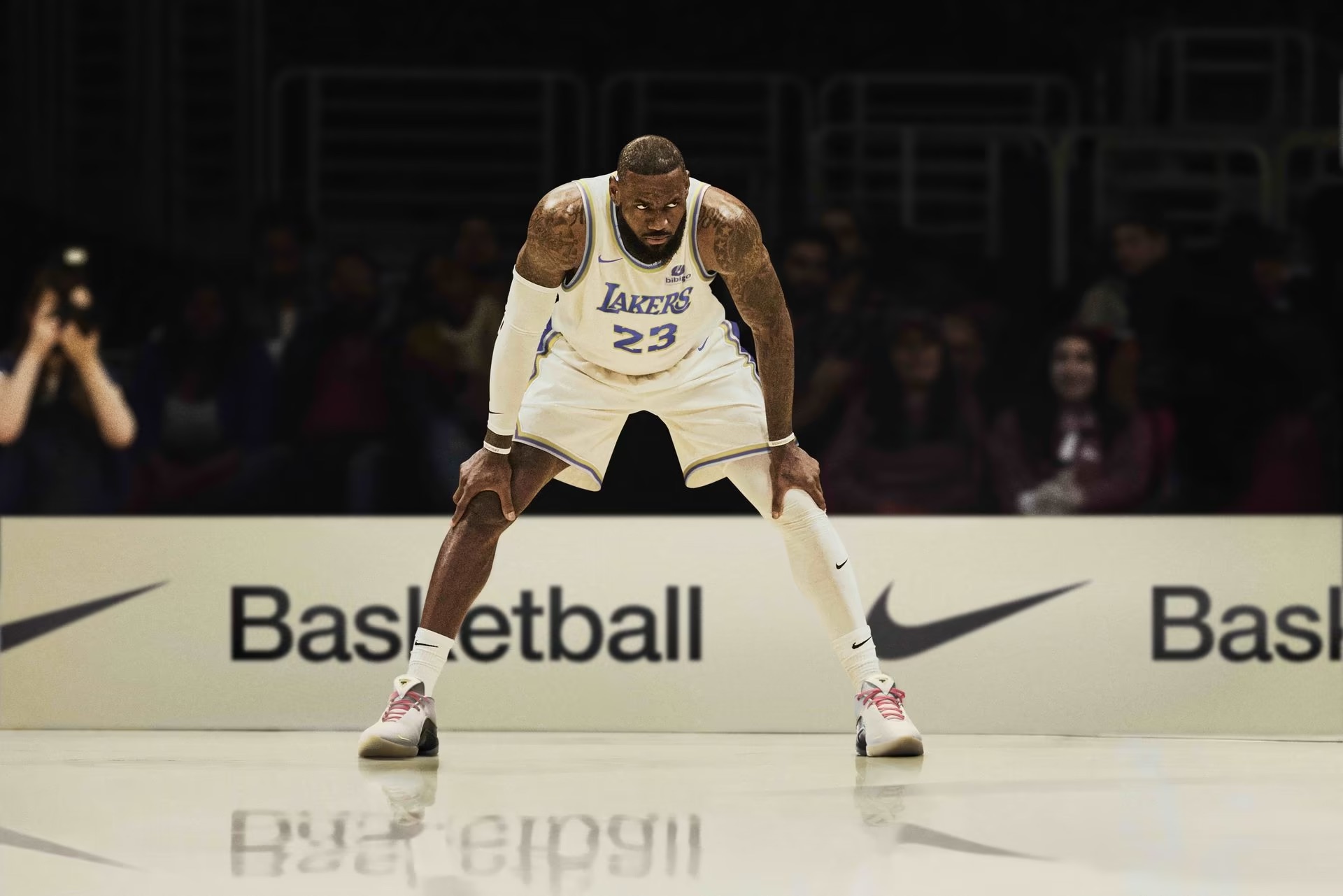
Nike basketball shoes
Nike doesn't just lead the basketball shoe market — it defines it. In the 2024-25 NBA season, the brand accounted for over five times more court minutes than the nearest competitor. Three lifetime endorsement deals — Michael Jordan, LeBron James, Kevin Durant — cover three generations of basketball. The Kobe 6 Protro, designed in 2010 for a player who passed away in 2020, is still the most-worn shoe in the league. No other brand operates at this scale, with this depth, across this many simultaneous signature lines.
The undisputed king of the hardwood: how Nike came to own NBA basketball
Nike's basketball dominance isn't recent — it's structural. In the global basketball shoe market, Nike holds an estimated 45% of market share, followed by adidas at approximately 20% — with over 23.6 million pairs sold annually across 60 countries. The gap between first and second is not a margin — it's a different category.
On NBA courts specifically, the dominance is even starker. In the 2022-23 season, 65.1% of NBA players wore Nike, compared to 10.8% for adidas. Nike accounts for over five times more court minutes than the nearest competing brand.
The foundation was laid in 1985 with the Air Jordan 1. The NBA fined Michael Jordan $5,000 per game for wearing it — Nike paid the fines and used the controversy as a marketing campaign. What followed was the signature shoe era: Nike understood before anyone else that the most powerful thing a basketball shoe could carry was an athlete's identity.
67,804 minutes on court — why the Kobe 6 is still the most-worn NBA shoe in 2026
The most striking data point in NBA footwear is not about a 2026 shoe. The Nike Kobe 6 logged 67,804 minutes on court in the 2024-25 season — 93% more than the second most-worn shoe. A shoe designed in 2010, for a player who passed away in 2020, is still the most trusted performance model in the league. Players choose it for what it does on the floor, not for what it means in culture.
Kobe Bryant took the number-one spot in StockX's 2025 basketball resale data, with the late legend also accounting for the top four bestselling basketball sneakers of the year. The Kobe line — particularly the Kobe 4, 5, and 6 — redefined what a basketball shoe could be. The low-cut silhouette was controversial when it launched. Today, appetite for Ja Morant's sneakers hasn't been dulled even by a down year on the court, with his Nike Ja 3 climbing to second place in NBA minutes — but the Kobe 6 remains untouchable at the top.
From the Air Force 1 to the Book 2: the Nike models that shaped basketball footwear
Nike's basketball catalog spans four decades of design milestones. The Air Force 1, introduced in 1982, was the first basketball shoe to use Nike Air cushioning — a technology so significant it eventually migrated into lifestyle culture entirely. The Air Jordan line, from the AJ1 to the current AJ40, is the most financially successful signature shoe franchise in history.
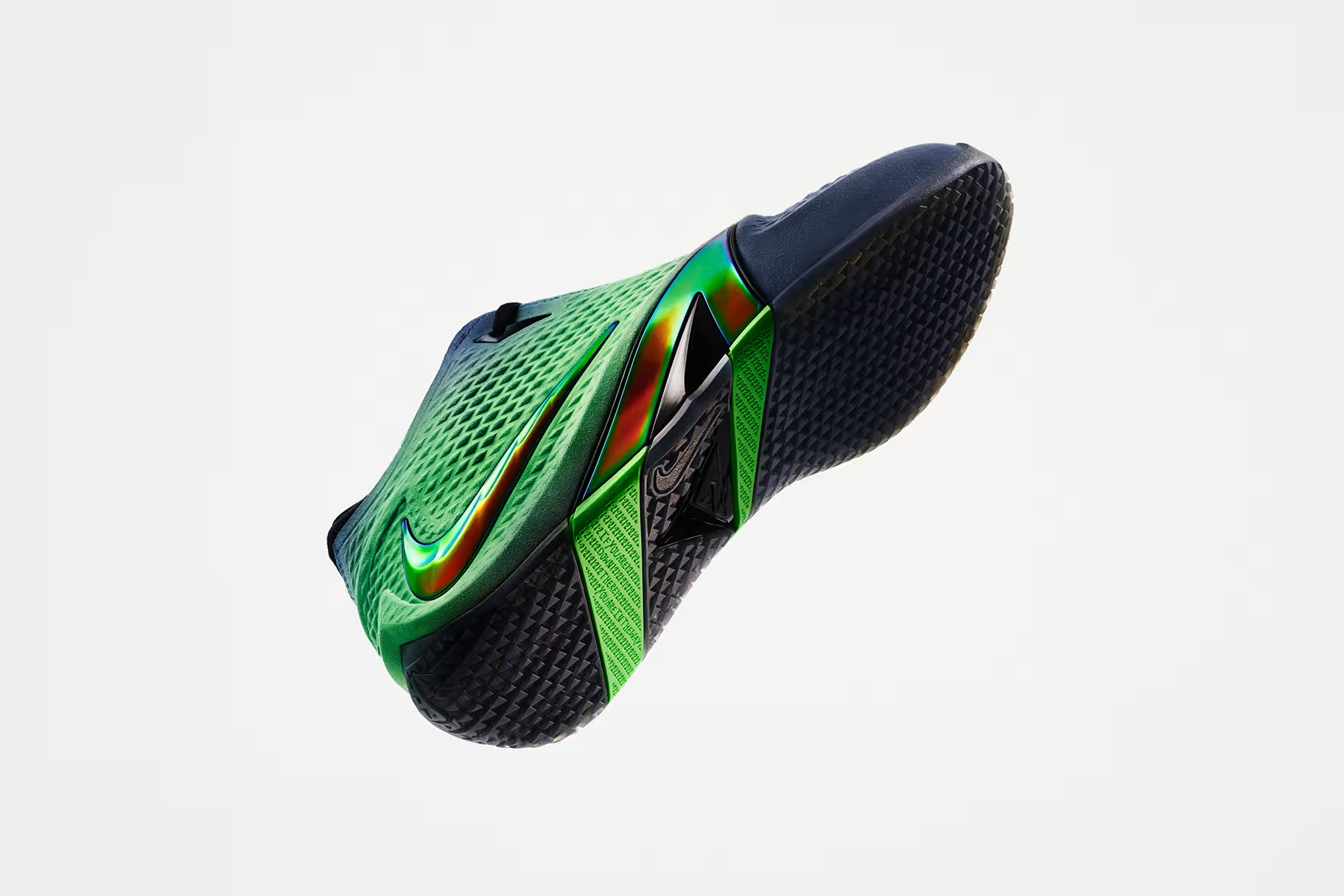
In 2026, the active performance catalog is broader than ever. The Nike Book 2 — Devin Booker's signature — is one of the most comfortable on-court shoes in the market. The GT Cut 4 serves the positionless era with low-to-ground responsiveness that guards and wings rely on. The LeBron XXIII continues a 23-year tradition of flagship cushioning technology.
Kobe Bryant's signature shoes had the most users in the NBA with 66 players wearing them in 2022-23, with Kyrie Irving and Paul George lines as second and third most popular. The variety across the Nike catalog means the brand covers every playing style and preference simultaneously.
Competing with Nike: who challenges them in basketball footwear?
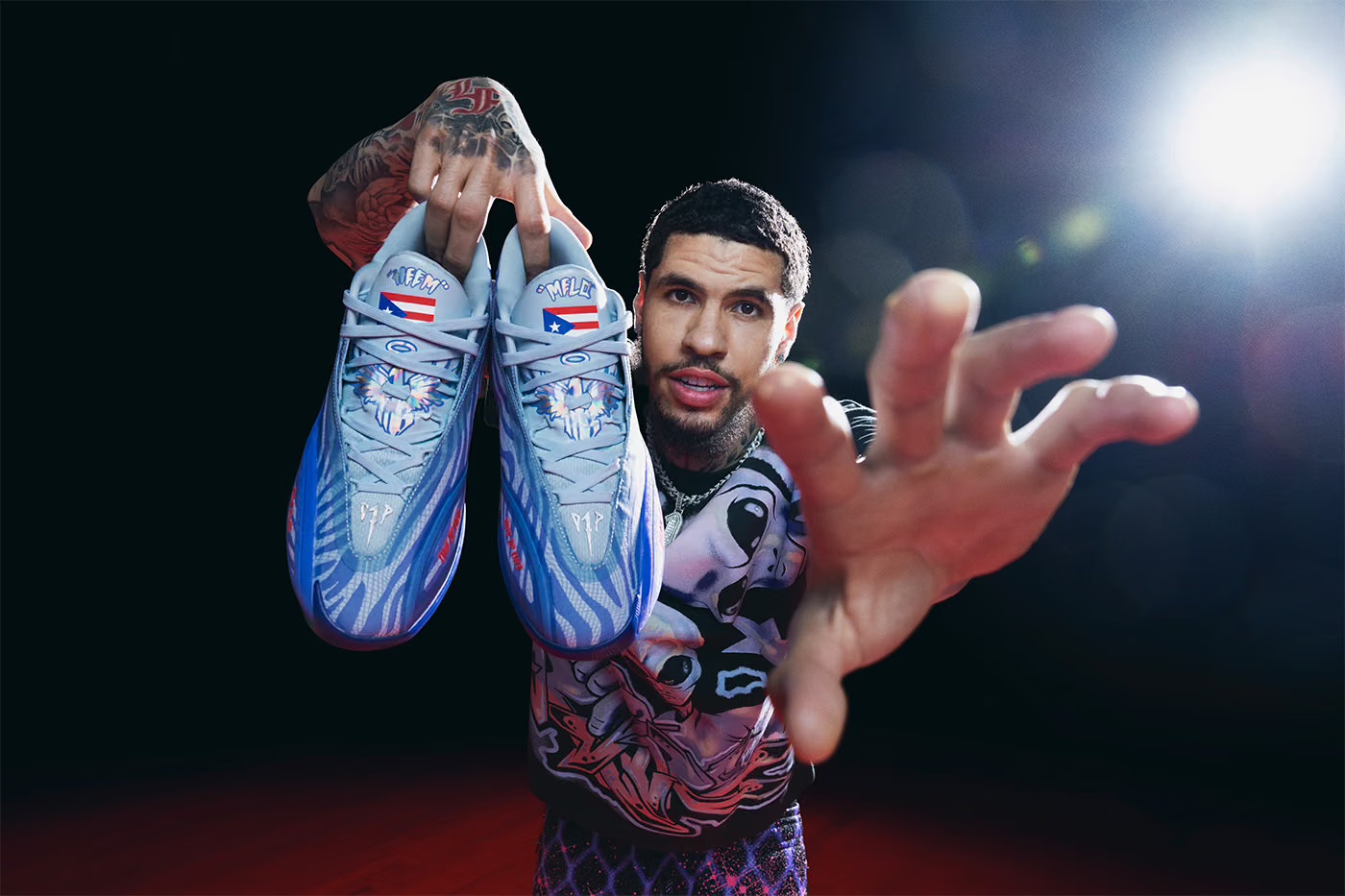
The honest answer is: not many brands seriously. adidas stays relevant through a spread-out roster anchored by Anthony Edwards, James Harden, Damian Lillard, and Donovan Mitchell. Jordan Brand — technically Nike's subsidiary — adds Tatum, Dončić, and Zion to the mix. PUMA has LaMelo Ball. New Balance is building with Kawhi Leonard, Tyrese Maxey, and Cooper Flagg.
The more interesting competition is coming from Chinese brands. Anta's Kai line, built around Kyrie Irving, is gaining genuine locker room credibility. 361°'s Jokic signature is outperforming expectations. These brands can't match Nike's marketing infrastructure or athlete depth — but they're producing performance specs that serious hoopers are noticing.
Nike's real moat isn't a single shoe or a single athlete. It's the depth of the roster and the breadth of the catalog. When adidas loses an athlete, it loses a line. When Nike loses one, it barely registers.
The low-cut revolution — Kobe Bryant's Nike line and why players still choose it 15 years later
Kobe Bryant went low-cut when everyone else was going high. The Kobe 4, released in 2009, was the first elite NBA player signature shoe to adopt a low-top silhouette as a deliberate performance choice — not a budget compromise. The received wisdom was that high-tops protected ankles. Kobe's position was that ankle strength and movement efficiency mattered more than artificial support.
While 68% of NBA players still use high-top basketball shoes, the low-cut segment has grown significantly since Kobe normalized it at the elite level. Every major brand now offers competitive low-cut performance options — a category that barely existed before Kobe made it credible.
Kobe's signature shoes carry an average retail price of $157.9 — 18.3% above the overall market average. The Kobe Protro line continues to command premium pricing and premium demand. The design held up because the biomechanical logic held up: players who trust their ankle strength and want to feel the court prefer low-cut, and Kobe gave them permission to make that choice.
Built for explosiveness: the Ja Morant Nike line and its rise to #2 on NBA courts
Ja Morant's Nike line occupies a specific and well-defined niche: the young, explosive guard who plays above the rim and wants a shoe that facilitates that vertical violence. Nike's fiscal report lists the Ja 3 as the number one selling performance basketball shoe by volume in North America.
Appetite for Ja Morant's sneakers hasn't been dulled by a difficult year on the court and trade rumors surrounding the Memphis Grizzlies star. That resilience says something about the line's strength: it doesn't depend entirely on Morant's on-court performance to sell. The shoe has built its own credibility among young hoopers who want to play like him regardless of what's happening in Memphis.
The Ja line has captured what the Kobe line captured a generation earlier — a playing style that young players aspire to, translated into a specific performance package. It's the most important emerging signature line in Nike basketball right now.
Two decades, one final season: LeBron James' Nike line and why his shoe outlasts everything
LeBron James signed with Nike in 2003, before he played a single NBA game. In 2015, Nike signed him to a lifetime deal — the first in the company's history — worth an estimated $1 billion, surpassing Kevin Durant's 10-year, $300 million contract at the time. The 2025-26 season is LeBron's last. The shoe line will outlast the career.
LeBron signature shoes carry an average retail price of $166.9 — 25% above the overall market average. The LeBron line is the highest-grossing active signature line in basketball — a product of 23 years of consistent on-court excellence and a fanbase that crosses generations.
Kevin Durant became the third NBA player to sign a lifetime deal with Nike in 2023, joining Michael Jordan and LeBron James — 15 signature shoes released, with a 16th in development at the time of signing. Three lifetime deals with three players who define three different eras of NBA basketball — a depth of athlete commitment no other brand can match.
NBA athletes wearing Nike: who represents the brand?
Nike's NBA roster in 2026 is the deepest in the league. Each signature athlete anchors a distinct market:
- LeBron James (drafted 2003) — Nike LeBron, now in its 23rd model; lifetime deal signed 2015
- Kevin Durant (drafted 2007) — Nike KD, 16+ models; lifetime deal signed 2023
- Ja Morant (drafted 2019) — Nike Ja, currently Ja 3; fastest-rising signature line in Nike basketball
- Devin Booker (drafted 2015) — Nike Book, currently Book 2
- Giannis Antetokounmpo (drafted 2013) — Nike Zoom Freak, currently Freak 6
- Victor Wembanyama (drafted 2023) — Nike Wemby, signature line in development
- Paolo Banchero (drafted 2022) — player-exclusive Jordan colorways; signature line expected
Upcoming Nike basketball drops: mark your calendar
Nike's basketball drop calendar is one of the most active in the market — Kobe Protro colorways, Ja 3 and Ja 4 updates, LeBron XXIII editions, and the GT Cut series refreshes drop consistently through the season.
We track every confirmed Nike basketball release on this page — retail price, drop date, and the court stats that tell you whether a shoe is actually being trusted by NBA players or just marketed to them.
Signature lines
LeBron
LeBron 21 · 22 · 23
Two decades, one final season. Nike's longest-running NBA signature.
Kobe
Kobe 6 Protro · 11
The low-cut revolution. Still #1 on NBA floors 15 years later.
KD
KD 17 · 18
Lifetime deal 2023. Technical benchmark for scoring guards.
Ja
Ja 1 · 2 · 3
Explosiveness-first. Fastest rise on court in 2026.
NBA athletes
| Name | Draft year | Current model | Contract | Retail price | Notes |
|---|---|---|---|---|---|
| LeBron James | 2003 | Nike LeBron, now in its 23rd model | lifetime deal signed 2015 | — | — |
| Kevin Durant | 2007 | Nike KD, 16+ models | lifetime deal signed 2023 | — | — |
| Ja Morant | 2019 | Nike Ja, currently Ja 3 | — | — | fastest-rising signature line in Nike basketball |
| Devin Booker | 2015 | Nike Book, currently Book 2 | — | — | — |
| Giannis Antetokounmpo | 2013 | Nike Zoom Freak, currently Freak 6 | — | — | — |
| Victor Wembanyama | 2023 | Nike Wemby, signature line in development | — | — | — |
| Paolo Banchero | 2022 | player-exclusive Jordan colorways | — | — | signature line expected |